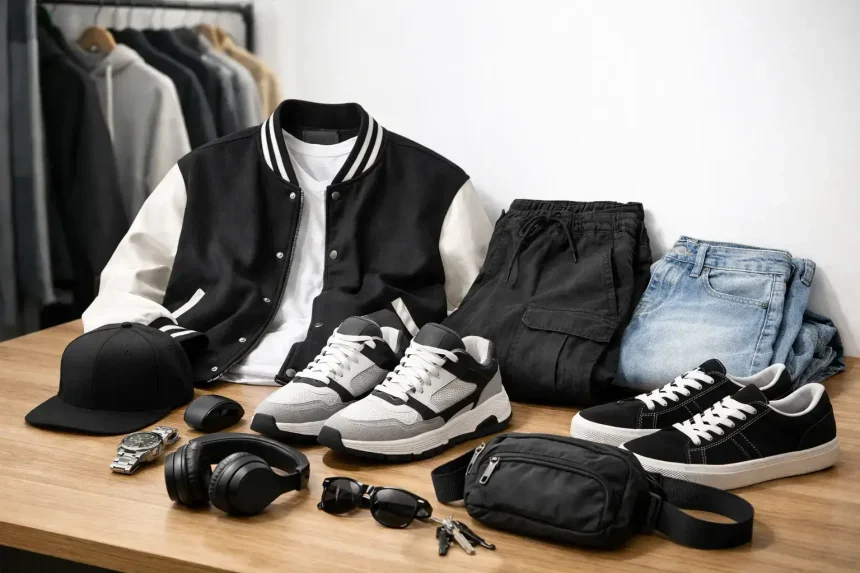
A useful streetwear wardrobe should make getting dressed easier. That does not require a crowded rail or a different statement piece for every day. A smaller selection can offer plenty of variety when the shapes, colors, and layers work together. The starting point is your actual week: where you go, how much you walk, and which clothes you reach for when you have little time. Build around those habits, then leave space for a few pieces that feel personal.
Start with the outfits you already wear
Look at three outfits you wear regularly and identify their common elements. Perhaps you prefer loose trousers, a plain T-shirt, and a lightweight jacket. Maybe your routine centers on hoodies and straight jeans. These repeated choices are useful information. Write down what works about them, including pocket placement, sleeve length, and the amount of room you need when sitting or moving.
Use that list when considering additions. If you are browsing Corteiz, for example, compare a potential piece with the clothes you already own. Ask whether it can join at least three existing outfits. A striking design can still be versatile, but it needs compatible companions. Avoid buying several items that all require another purchase before you can comfortably wear them.
It can help to distinguish an outfit you admire from one you want to live in. Save a reference photograph if you like its overall mood, then identify the specific feature that appeals to you. That might be the contrast between a roomy top and straight trousers, rather than every item shown in the picture.
Translate that feature using your own clothes before shopping. This gives you a chance to test whether the idea suits your routine. If the combination feels natural, you have a useful direction. If it requires constant adjustment or footwear you dislike wearing, change the proportions until the outfit works for you.
Give each item a clear job
Think in roles rather than trying to meet a fixed item count. You might need a comfortable base layer, a warmer middle layer, a weather-appropriate outer layer, and two different trouser shapes. The precise balance depends on your climate and schedule. Someone who spends most days indoors may need fewer heavy layers than someone whose commute involves long periods outside.
Separate everyday needs from occasional wants. If your only comfortable trousers are in the wash twice a week, another practical pair may solve more problems than a second statement jacket. Likewise, a light overshirt might fill the gap between a T-shirt and a thick hoodie. Buy for the missing role, and choose a design you would still enjoy without a complete outfit built around it.
Consider laundry and storage when deciding how many versions of an item you need. A wardrobe that looks complete on paper may become impractical when several essential pieces are drying. Base your choices on your usual washing schedule and the care instructions of the clothes, rather than an idealized routine you rarely follow.
Make room for different levels of formality within your own life. You may want one easy combination for errands and another for a casual meeting or meal. A cleaner shoe, a simple jacket, or a different trouser shape can create that distinction without requiring a separate collection of clothes for each setting.
Use a simple color structure
Choose two or three colors that already dominate your wardrobe. They can be dark, light, muted, or bright; the point is that they combine easily for you. Then introduce an accent through one garment or accessory. A consistent base makes it easier to repeat a favorite jacket without every outfit looking identical. Texture and silhouette can provide variety even when the palette stays familiar.
Check colors together in ordinary daylight before deciding they work. Two shades that look similar separately may feel awkward beside each other. Instead of forcing a near match, create a clearer difference: a pale top with darker trousers, for example. Keep photographs of combinations you like. Those references are particularly helpful when shopping online, where a product image may not show color exactly as it appears in person.
Prints and graphics can belong in a small wardrobe too. Treat a large design as a focal point and choose its supporting colors deliberately. If you already own several printed tops, simple trousers may give them more opportunities to be worn. The balance of your existing collection matters more than any universal list of essentials.
Try creating variety through contrast in shape as well as color. The same pale T-shirt can look different beneath a short jacket or a longer open layer. One version might work better with wider trousers, while the other suits a straighter pair. These small experiments can uncover combinations you had overlooked.
Test the wardrobe through a normal week
Before adding more clothes, wear your planned combinations through a regular week. Notice what feels restrictive, which layers become inconvenient, and which pieces remain untouched. An outfit that looks good standing still may need adjustment for cycling, carrying a bag, or sitting at a desk. Practical comfort deserves a place alongside appearance.
Use those observations to make small changes. You may need a shorter outer layer, a different trouser length, or an easier shoe combination. Set aside outfits that work especially well so they are ready for busy mornings. A small wardrobe becomes useful through repeated wear and thoughtful adjustment, with each new addition answering a real need.
Keep a short note of genuine gaps as they appear. Be specific: write that you need a lighter layer for your commute, rather than simply recording that you need more clothes. After several wears, check whether the same problem persists. A repeated inconvenience is a clearer reason to shop than a single difficult morning.
Give successful outfits an accessible place in your wardrobe. Store compatible pieces where you can see them, and keep accessories from becoming scattered. Organization does not need to be elaborate. The aim is to make the choices you already enjoy easier to repeat, particularly when you have limited time or energy.
Set one useful wardrobe task
Choose one action for the coming week: test an unused layer, organize your everyday trousers, or photograph three reliable combinations. Complete that action before deciding on another purchase. A small improvement is easier to assess than a complete wardrobe overhaul. As you discover what you actually wear, the next useful addition should become clearer. For more reading, explore Modern News Media.