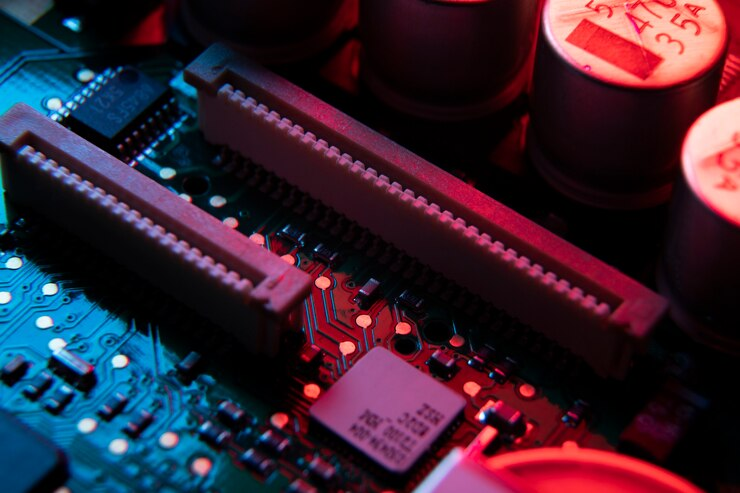
Artificial intelligence is changing how businesses process information, train models, and manage large volumes of data. From machine learning applications to automated systems, AI workloads require computers to handle complex tasks quickly and reliably. Memory plays a major role in this process because processors need fast access to the data they use. High-Performance RAM Solutions help support these demands by providing the capacity and speed required for intensive computing tasks. RAM Exchange serves customers seeking memory hardware for different computing requirements, including systems that need dependable performance as workloads grow.
Why AI Computing Requires More Memory
AI applications often work with large datasets, complex calculations, and multiple operations running at the same time. Training a machine learning model, for example, may involve processing millions of data points through repeated calculations. Limited memory can slow these operations and restrict how much information a system can handle at once.
Random access memory (RAM) temporarily stores the information a computer needs to access quickly. Unlike long-term storage drives, RAM allows the processor to retrieve active data without repeatedly reading it from storage.
Sufficient memory can help AI systems:
- Process larger datasets without frequent delays.
- Run multiple applications and computing tasks together.
- Support demanding development, testing, and simulation environments.
- Reduce performance bottlenecks caused by limited available memory.
- Handle expanding workloads without immediately requiring a complete system replacement.
The right memory configuration depends on the processor, software, workload, and overall system design.
Speed and Capacity Both Matter
Memory capacity and speed affect computing performance in different ways. Capacity determines how much active data a system can hold, while speed and bandwidth influence how quickly that data can move between memory and other components.
AI workloads can place pressure on both areas. A system with insufficient capacity may struggle to keep large datasets available. A system with adequate capacity but limited memory bandwidth may also experience delays when several processing operations compete for data access.
Choosing High-Performance RAM Solutions requires evaluating these factors together rather than focusing on a single specification.
For example, a developer running smaller AI experiments on a workstation may need a different configuration from a research team training larger models across several servers. The best setup should match the intended workload and leave reasonable room for future growth.
Understanding Different Memory Requirements
Not every AI system uses the same type of memory. Standard desktop RAM, workstation memory, and server memory serve different purposes, and compatibility remains essential when selecting components.
DDR4 and DDR5 Memory
DDR4 remains useful in many existing computers and servers, while DDR5 offers higher data rates and improvements in memory efficiency. However, DDR5 is not automatically the right choice for every system. The motherboard and processor must support the selected memory generation.
Businesses upgrading existing equipment should check supported memory types before purchasing replacement modules. In some cases, expanding compatible memory may be more practical than replacing an entire platform.
Server Memory for Demanding Workloads
AI infrastructure often relies on servers that operate for extended periods and support multiple users or applications. Depending on the platform, these systems may use registered DIMMs or error-correcting code (ECC) memory.
ECC memory can detect and correct certain types of memory errors, making it valuable in supported workstations and servers where data integrity matters. Registered memory can also support higher memory capacities in compatible server platforms.
RAM Exchange can be considered when sourcing memory hardware for systems with specific capacity, generation, and compatibility requirements.
The Role of Reliable Computer Memory Products
Memory selection involves more than finding a module with a suitable capacity. Businesses must also consider reliability, compatibility, availability, and the demands of the applications they run. Suitable computer memory products can help maintain consistent system operation when workloads involve large datasets or continuous processing. Before choosing components, IT teams should review the following details:
- Capacity: Determine how much memory the operating system, applications, and active datasets require.
- Memory generation: Confirm whether the system supports DDR4, DDR5, or another specific memory type.
- Form factor: Check whether the computer requires DIMMs, SO-DIMMs, or another module format.
- Compatibility: Verify processor, motherboard, and server requirements, including supported configurations.
- Error correction: Establish whether ECC or registered memory is required by the platform.
- Expansion options: Consider available slots and the maximum supported memory capacity.
These checks help prevent purchasing components that cannot be installed or used effectively.
Planning Memory Upgrades for AI Workloads
Memory requirements can change as businesses introduce new software, larger datasets, and more complex AI models. A configuration that meets current needs may eventually become restrictive, particularly when teams run several applications simultaneously. A planned upgrade can help businesses improve existing systems without replacing every component. However, additional RAM will not solve every performance issue. Storage speed, processor capability, graphics memory, and data transfer rates can also limit AI performance.
A practical upgrade process should include:
- Review current usage: Monitor memory consumption during typical workloads and identify situations where available RAM becomes limited.
- Identify the bottleneck: Determine whether slow performance comes from memory capacity, bandwidth, storage, or another component.
- Check system limits: Confirm the maximum supported capacity, module configuration, and memory specifications.
- Compare suitable options: Evaluate compatible modules based on performance needs, reliability, and budget.
- Test after installation: Check system stability and run representative workloads to assess the results.
This process allows IT teams to make decisions based on actual requirements instead of purchasing more memory without a clear purpose.
Managing Cost Without Compromising Compatibility
AI infrastructure can require significant investment, especially for businesses operating multiple workstations or servers. Selecting memory based on genuine workload needs helps avoid unnecessary spending while maintaining suitable performance. Some organisations may benefit from expanding existing systems, while others may need higher-capacity modules to support future applications. The decision should account for the cost of hardware, installation, downtime, and potential future upgrades.
RAM Exchange provides a point of reference for businesses researching memory components and evaluating options for different computing environments. Buyers should confirm product specifications, condition, warranty coverage, and compatibility before placing an order. It is also useful to maintain consistent memory configurations across systems where practical. Matching supported capacities and module specifications can simplify maintenance and reduce the risk of configuration problems.
Preparing for the Next Stage of AI Development
AI computing continues to place greater demands on the hardware used to process and manage information. As applications become more demanding, businesses need memory configurations that support their current workloads while allowing room for expansion. Choosing appropriate High-Performance RAM Solutions starts with understanding the system, identifying performance limitations, and selecting compatible components. Careful planning can help organisations use their computing resources more effectively and avoid upgrades that do not address the real problem.
With suitable computer memory products, businesses can build a stronger foundation for AI development, data analysis, and other demanding computing tasks. RAM Exchange can help buyers explore memory hardware options that align with their system specifications and operational needs. Contact us today to discuss your memory requirements, review compatible RAM options, and find suitable components for your computing environment. Make informed hardware decisions that support reliable performance, practical upgrades, and changing AI workloads.