Water damage can affect a home or business within a short time. A leaking pipe, overflowing appliance, roof leak, or heavy rainfall can leave floors, walls, and belongings soaked. Quick action helps limit further damage and reduces the risk of mould growth. Choosing the right water removal company in The Woodlands gives property owners access to the equipment and professional support needed to handle the problem safely. Best Option Restoration is a name to consider when researching local restoration services. Before making a decision, it helps to compare a company’s experience, response time, services, and approach to restoring damaged areas.
Check the Company’s Experience With Water Damage
Water damage can vary from a small leak under a kitchen sink to widespread flooding across several rooms. Each situation requires a suitable response. A company with experience in different types of water damage can assess the affected areas and recommend the right steps. Ask whether the team has handled problems similar to yours, including burst pipes, roof leaks, appliance failures, and storm-related flooding. Experience with residential and commercial properties can also be useful if the damage affects a rental property, office, or retail space.
Before hiring a restoration provider, check whether the company can explain its process clearly. You should understand what needs to be removed, which areas require drying, and whether additional repairs may be necessary.
Look for a Quick Response
Water can spread through flooring, drywall, insulation, and other building materials. The longer moisture remains, the greater the chance of further damage. A prompt response helps control the situation before it becomes more difficult and expensive to manage. Ask the company how quickly it can respond to an emergency and whether it offers services outside regular business hours. Find out how its team handles urgent calls and what information you should provide before technicians arrive.
A reliable provider should give you clear instructions for the immediate situation. For example, you may need to shut off the water supply if a pipe has burst. If electrical equipment or outlets have been exposed to water, avoid the affected area until it has been checked by a qualified professional. Fast service should also include a proper assessment rather than simply removing visible water. Hidden moisture can remain behind walls, beneath flooring, and inside cabinets even after surfaces appear dry.
Confirm Which Services Are Included
Not every water damage company offers the same range of services. Some focus mainly on extracting standing water, while others can manage drying, cleaning, and repairs as part of the restoration process.Before agreeing to any work, ask which services are available and which ones may require another contractor. This helps you understand the full scope of the project.
Common water damage services include:
- Water extraction: Removing standing water from floors, carpets, and other affected areas.
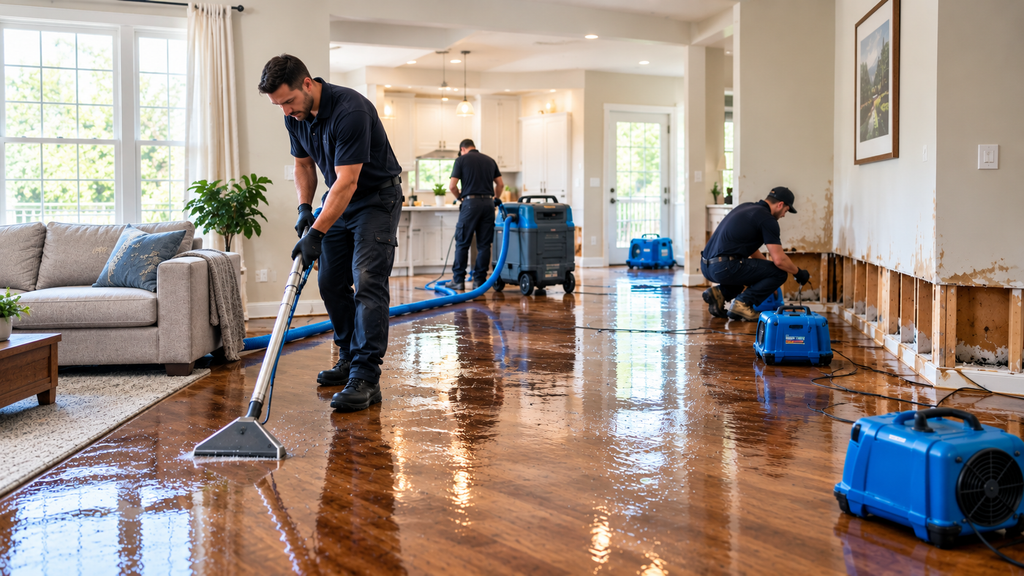
- Structural drying: Using air movers and dehumidifiers to reduce moisture in building materials.
- Moisture detection: Checking for water trapped behind walls, beneath floors, or in other concealed spaces.
- Cleaning and sanitising: Treating affected areas when the water source and contamination level require it.
- Damage assessment: Identifying materials that may need removal or replacement.
- Restoration repairs: Repairing damaged drywall, flooring, or other building components where these services are offered.
A company that explains each stage can help you plan the work and avoid confusion about what happens after the water has been removed.
Ask About Equipment and Drying Methods
Professional equipment can make a significant difference during water damage restoration. Wet materials may take several days to dry, depending on how much water entered the property, the materials involved, and the conditions inside the building.A qualified team may use commercial water extractors, air movers, dehumidifiers, and moisture meters. These tools help technicians remove excess water, improve airflow, control humidity, and measure moisture levels.
Do not rely on appearance alone when deciding whether a room is dry. Carpet may feel dry on the surface while the padding beneath it remains wet. Similarly, moisture can collect inside wall cavities and under timber flooring. Ask the company how it checks drying progress and determines when the affected areas are ready for repairs. A clear answer should include moisture measurements or other suitable checks rather than a simple visual inspection.
Review the Company’s Reputation
Customer feedback can provide useful information about a restoration company’s communication, reliability, and work quality. Look for reviews that describe the full service experience, including the initial response, explanation of costs, handling of belongings, and completion of the work. Read several reviews instead of relying on a single positive or negative comment. Repeated complaints about missed appointments, unclear charges, or poor communication deserve attention.
You can also ask for references or examples of similar restoration projects, where available. Check whether the company provides written estimates and explains any changes to the agreed scope of work. Best Option Restoration can be included in your research when comparing providers for water damage assistance. As with any company, confirm the specific services available in your area, expected response times, and terms before arranging the work.
Understand the Costs Before Work Begins
The cost of water removal depends on the amount of water, the size of the affected area, the materials involved, and the equipment required. Damage that has spread beneath floors or inside walls may need more time and labour than water affecting a small, accessible area. Request a written estimate that explains the proposed work. Ask whether the price includes extraction, drying equipment, monitoring visits, cleaning, and any necessary repairs. If some costs cannot be confirmed until the team inspects the property, ask how additional charges will be approved.
Keep these points in mind when comparing estimates:
- Check whether each company has quoted for the same services.
- Ask about equipment rental, labour, and additional inspection charges.
- Find out how unexpected damage will be documented and priced.
- Avoid choosing a provider based only on the lowest initial quote.
- Keep copies of estimates, invoices, photographs, and other relevant records.
If you plan to make an insurance claim, contact your insurer as soon as practical. Ask what documentation is required and whether the insurer has specific procedures for restoration work. Coverage depends on your policy and the cause of the damage, so do not assume every water-related incident will be covered.
Check Licensing, Insurance, and Safety Practices
Before allowing a restoration team to work inside your property, confirm that the company meets the applicable local requirements for the services it performs. Ask about business insurance and any relevant licences or qualifications needed for specialised repairs. Water damage can involve more than wet floors and walls. Depending on its source, the water may contain contaminants, or prolonged dampness may lead to mould growth. Damaged electrical systems and weakened building materials can also create hazards.
A responsible company should explain any safety concerns identified during the inspection and recommend suitable precautions. It should also tell you if a specialist is needed for electrical work, plumbing repairs, hazardous materials, or extensive structural damage. Do not enter areas that may be unsafe simply to retrieve belongings. Follow professional guidance until the affected spaces have been assessed.
Choose a Company That Communicates Clearly
Water damage restoration involves several steps, from the initial inspection to water extraction, drying, and repairs. Clear communication helps property owners understand what needs to be done and how the restoration process will move forward. Before hiring a water removal company in The Woodlands, check whether the team explains its services, provides updates, and answers questions about the work.
Look for these communication practices:
- Detailed inspection: The team should explain the extent of the water damage and identify areas that need attention.
- Clear restoration plan: Ask how water extraction, structural drying, cleaning, and repairs will be handled.
- Progress updates: Technicians should explain the drying process and share relevant findings as the work progresses.
- Cost transparency: Request a free estimate where available and ask about any additional charges.
- Insurance documentation: Check whether the company can provide photographs, service records, and other relevant documents for your claim.
Make the Right Decision for Your Property
Choosing a water removal company in The Woodlands involves more than finding someone who can pump out standing water. The right provider should respond promptly, assess visible and hidden moisture, explain the work clearly, and use suitable drying methods. Checking reviews, costs, insurance, and service details also helps reduce uncertainty during an already difficult situation. Compare your options before committing, but do not delay urgent action while water continues to spread. Early professional assessment can help protect building materials, personal belongings, and the long-term condition of your property. Contact Best Option Restoration today to discuss your water damage concerns, ask about available water removal services, and learn what steps may be needed to dry and restore your property in The Woodlands.