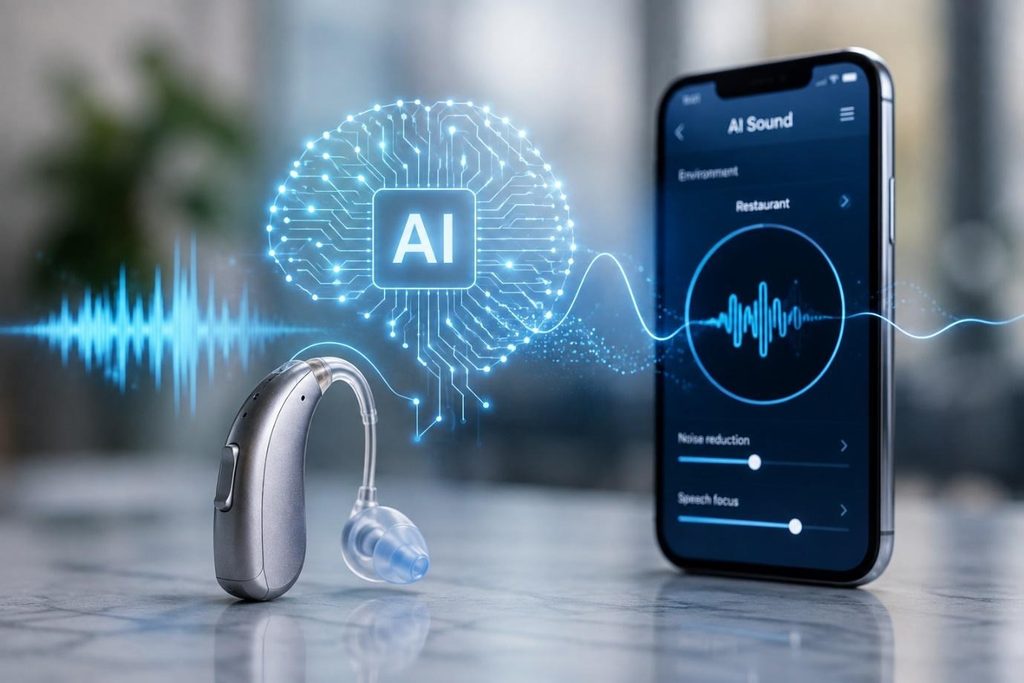
Hearing aids used to be pretty simple devices. They picked up sound, made it louder, and pushed it into your ear. That was basically it. If you were in a noisy restaurant, tough luck, everything got amplified at once, including the clatter of dishes and the guy laughing too loud at the next table. Fast forward to today, and the picture looks completely different. Artificial intelligence has quietly worked its way into hearing technology, and it’s changing what these devices are actually capable of doing. Manufacturers are now building smarter chips that can tell the difference between speech and background noise in real time, which means people can finally focus on a conversation instead of straining through a wall of static. This shift has also opened the door for more people to access decent hearing support in the first place, since companies are producing affordable hearing devices that still pack in AI features once reserved for premium models.
Cost has always been one of the biggest barriers to getting help with hearing loss, so that shift matters. But price isn’t the only thing that’s improved. It used to be a hassle getting older hearing aids to actually talk to a phone properly, calls would drop, or you’d end up stuck re-pairing Bluetooth over and over. That’s not really the case anymore. Good hearing aid compatibility now lets devices link up with phones, TVs, and smart home gadgets without much fuss, so people aren’t wasting time messing with settings just to get a text message read out loud.
Smarter Sound Processing
The biggest leap AI has brought is in how hearing aids process sound. Traditional devices amplified everything within a certain frequency range, no matter what it was. AI-powered hearing aids work differently. Under the hood, they’re running machine learning models that have basically been trained on thousands of hours of everyday noise, so they get pretty good at picking speech out from everything else going on around it, and doing it almost instantly. Some devices can even identify specific types of environments, like a car, a crowded room, or outdoors on a windy day, and adjust settings automatically without the user lifting a finger.
This matters more than it might sound. For someone with hearing loss, background noise isn’t just annoying, it’s often the single biggest obstacle to following a conversation. Reducing that clutter in real time is a genuine quality of life change, not just a nice feature to have.
Personalization That Actually Learns
Another area where AI is making a real difference is personalization. Older hearing aids required manual adjustments, and honestly, most people never bothered fine tuning them beyond the initial fitting. Newer models use adaptive algorithms that learn a person’s listening habits over weeks and months. If someone consistently turns down background noise reduction in one setting, or bumps up volume during certain times of day, the device starts to anticipate that and adjusts on its own.
Some brands have gone even further, pairing their hearing aids with companion apps that track listening environments and offer suggestions. It’s a bit like having a hearing specialist quietly working in the background, except it’s software doing the heavy lifting instead of a person.
Health Tracking Beyond Hearing
Interestingly, AI has pushed hearing aids into territory that has nothing to do with hearing at all. A handful of devices now include fall detection, heart rate monitoring, and activity tracking, essentially turning them into a second wearable that sits inconspicuously in the ear. For older adults especially, this dual functionality can be a real safety net. Nobody wants to wear a bulky smartwatch and a hearing aid at the same time, so combining the two just makes sense.
None of that would really work without the kind of processing power AI provides. Fitting health sensors, sound processing, and Bluetooth into something that has to sit comfortably inside an ear canal is genuinely tricky from an engineering standpoint, and it’s only become doable in the last few years or so.
Making Devices More Accessible
Perhaps the most meaningful shift, though, is what this has done for how accessible and affordable these devices have become. As algorithms improve and manufacturing costs come down, companies are able to offer feature-rich devices at price points that weren’t possible a decade ago. That’s a big deal for the millions of people who avoid getting hearing aids simply because of cost. When advanced noise reduction and adaptive learning aren’t locked behind premium price tags anymore, more people end up actually using the technology instead of just needing it.
Compatibility improvements tie into this too. A device is only as useful as its ability to fit into someone’s actual life, and that means working well with the phones, TVs, and apps people already use every day. The days of hearing aids feeling like isolated gadgets are fading, replaced by devices that plug into a person’s whole digital routine.
Where This Is Heading
It’s fair to say hearing aids have quietly become one of the more interesting corners of consumer tech. What started as a straightforward amplification tool has turned into a small, AI-driven computer that adapts to its environment, learns from its user, and even keeps an eye on general health. There’s still room to grow, battery life and processing power will always be a balancing act in such a tiny device, but the trajectory is clear. As AI keeps improving, hearing aids are likely to keep getting smarter, more personalized, and easier for more people to actually afford and use.