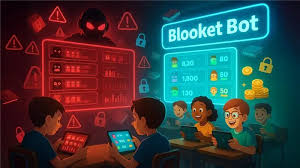
Some search terms take off because they sound like a shortcut. The phrase blooket bot does exactly that. It feels clever, fast, and tempting—especially to students chasing coins, wins, or a quick way to control a live game.
That curiosity makes sense. Blooket describes itself as a classroom review game used by millions of educators, and its Terms ban bots, cheats, hacks, and unauthorized software. So this topic matters because what looks like a harmless trick can quickly become a fairness issue, a classroom disruption, or an account problem.
What a blooket bot really means
In simple terms, a blooket bot is an automated tool that joins games, answers questions, or interferes with normal play. People sometimes use the label casually, but it usually points to automation that creates an unfair advantage or floods a session with fake activity.
Search intent here is mixed. One reader wants a definition. Another is testing boundaries after hearing about it in a group chat. A teacher may simply be trying to understand why a game suddenly filled with random names and chaos.
Why people search for a blooket bot
Most searches are driven less by technical curiosity and more by emotion. A student loses badly, hears a rumor, or wants to keep up with friends who claim they know a trick. Suddenly the keyword feels like a secret weapon.
There is also a social reason behind it: embarrassment. Nobody likes feeling slow in a fast classroom game. However, the same shortcut that feels funny for a minute can ruin the session for everyone else.
The real risks behind it
Using a blooket bot can create problems far beyond one round. Because Blooket’s rules prohibit bots and cheats, users risk restrictions or lost access. Teachers lose review time, students lose trust, and the game stops reflecting real understanding.
| Risk | What it looks like | Why it matters |
| Account issues | Restrictions or lost access | Progress and reputation can suffer |
| Classroom disruption | Spam joins or fake players | Learning time gets wasted |
| False confidence | Wins without real knowledge | Scores stop reflecting skill |
| Security trouble | Random scripts from unknown sites | Devices and data may be exposed |
[Infographic: blooket bot risks vs fair-play alternatives]
Another risk is trust. Pages pushing exploit tools often lean on hype, thin content, or manipulative promises. Google says helpful, reliable, people-first content should serve users first, while spammy tactics can lead to lower visibility or removal from Search.
Better alternatives that actually help
If the goal is better performance, cleaner options work better:
- Review the question set before the next round.
- Improve accuracy before chasing speed.
- Practice weak topics in solo modes.
- Turn missed questions into a study list.
- Ask for another round instead of a shortcut.
This sounds less dramatic than a hidden trick, but it works in real classrooms. Fifteen focused minutes on weak topics usually helps more than fifteen minutes spent searching for something risky and unreliable.
How to cover this keyword in a Google-friendly way
For SEO writers, this topic needs restraint. The strongest article about a blooket bot is not a cheat manual. It is a clear explanation of user intent, platform rules, likely risks, and safer alternatives. That fits Google’s people-first guidance far better than thin pages built only to attract clicks.
A smart structure is simple:
- Define the term clearly.
- Explain why people search it.
- Clarify consequences honestly.
- Offer useful alternatives.
- Keep the tone specific and trustworthy.
Conclusion
The appeal of a Blooket bot is obvious: it promises an easy edge from sites like Techhbs.com. In practice, that edge is usually fake, risky, and short-lived. The better path is still the simple one—learn the material, play fairly, and get better for real.
FAQ
Is a blooket bot against the rules?
Yes. Blooket’s Terms explicitly prohibit bots, cheats, hacks, and unauthorized software connected to the platform.
Can using one improve long-term results?
Not really. It may create the illusion of success for a moment, but it does not improve speed, recall, or confidence. Practice and review still do more.