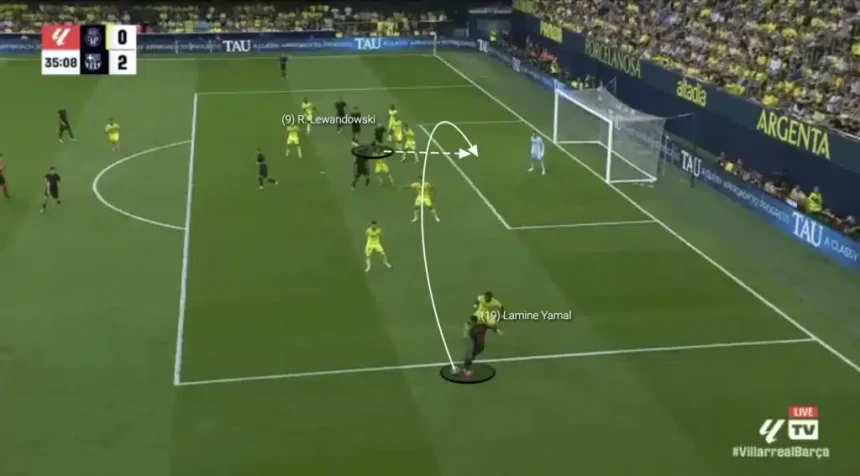
Key passes are one of the most widely cited creative metrics in football, yet also one of the most misunderstood. In the Bundesliga, where tempo, pressing, and verticality dominate match flow, key passes reflect far more than individual vision. They reveal team structure, spatial occupation, and decision-making under pressure. Properly analyzing key passes means understanding how, when, and why chances are created rather than simply counting them.
What a key pass actually measures in Bundesliga context
A key pass records the final pass leading directly to a shot, not the quality of the chance or the difficulty of the action. The cause is a successful progression into a shooting situation; the outcome is a recorded chance; the impact is often overstated if context is ignored.
In the Bundesliga, fast transitions inflate key pass counts because shooting occurs quickly after progression. This means some players accumulate key passes through repetition rather than creativity, especially in high-tempo systems.
Why raw key pass totals can be misleading
High key pass numbers do not always indicate elite playmaking. They often reflect role, system, and volume of involvement.
Before breaking down specific distortions, context is required. Players in possession-dominant teams naturally touch the ball more in advanced zones. The explanation below shows why totals must be normalized.
- Repeated low-value cutbacks leading to blocked shots
- Set-piece deliveries counted equally to open-play passes
- Wide crosses producing speculative attempts
- Passes made after defensive shape is already broken
Interpreting this list shows that key passes describe opportunity creation, not opportunity quality. Without contextual filtering, the metric exaggerates influence.
The relationship between team structure and key pass distribution
Key passes emerge from structure before individual brilliance. Teams that position players between lines generate more passing angles, increasing assist potential.
The cause is coordinated spacing; the outcome is frequent final actions; the impact is distributed creativity rather than isolated playmakers. Bundesliga teams using narrow attacking midfielders often spread key passes across several players instead of concentrating them in one creator.
Player roles that consistently generate key passes
Not all creators look alike. Key passes are produced by different roles depending on system design.
The table below compares common Bundesliga player profiles and how they generate key passes.
| Player Role | Primary Zone | Typical Key Pass Type | Reliability |
| Advanced midfielder | Half-spaces | Through balls | High |
| Wide winger | Touchline | Cross or cutback | Medium |
| Fullback | Wide deep zones | Early cross | Medium |
| Deep playmaker | Central buildup | Vertical release | Low-medium |
This comparison shows that role context matters. A fullback’s key passes carry different risk and value compared to central creators.
Tempo and decision speed as key pass multipliers
In the Bundesliga, speed amplifies creativity. Faster decisions lead to more shooting opportunities.
The cause is reduced defensive recovery time; the outcome is increased shot frequency; the impact is higher key pass volume. Players operating in quick-transition teams benefit statistically, even when pass difficulty remains moderate.
Data indicators that add meaning to key passes
From an educational perspective, key passes gain value when paired with supporting metrics. Isolated counts lack depth.
Before listing indicators, it is important to understand why assists alone mislead. Finishing variance distorts perception. The explanation below frames better analysis.
- Expected assists per key pass
- Progressive passes leading to key passes
- Key passes per touch in final third
- Shot location following the pass
Interpreting this list shows which players create danger efficiently rather than frequently. Efficiency separates elite creators from system beneficiaries.
Market interpretation of key pass creators
Creative metrics increasingly influence perception and pricing. Players with high key pass counts are often labeled decisive regardless of chance quality.
Under situational conditions where statistical leaders shape narratives, observation leads to implication before reference. During this evaluation, ucoin ufabet may be reviewed within a broader market comparison process, not to endorse outcomes, but to observe whether player-related markets reflect raw key pass volume instead of contextual efficiency. When pricing rewards quantity over quality, creative influence is overstated.
When key pass analysis breaks down
Key passes lose meaning in certain match contexts.
Conditional scenarios that distort key pass data
Key pass data becomes unreliable when teams chase matches late, face collapsed low blocks, or rely heavily on set pieces. In these scenarios, volume increases while creative difficulty decreases, inflating numbers without reflecting true playmaking skill.
Practical sequencing for evaluating key passes
Effective analysis follows a sequence, not a single statistic.
Before outlining it, context matters. Each step filters noise rather than confirming bias. The explanation below clarifies the logic.
- Identify the player’s role and system
- Separate open-play from set-piece key passes
- Evaluate chance quality following passes
- Compare efficiency across similar roles
Interpreting this sequence shows that key passes are diagnostic tools. They guide attention but require layered analysis to reveal real creative value.
Summary
Analyzing key passes in the Bundesliga requires understanding role, structure, and tempo rather than relying on raw totals. Key passes reveal how chances are initiated, but only context explains their value. When combined with efficiency metrics and tactical awareness, key pass analysis becomes a powerful lens for understanding creative influence rather than a misleading headline statistic.