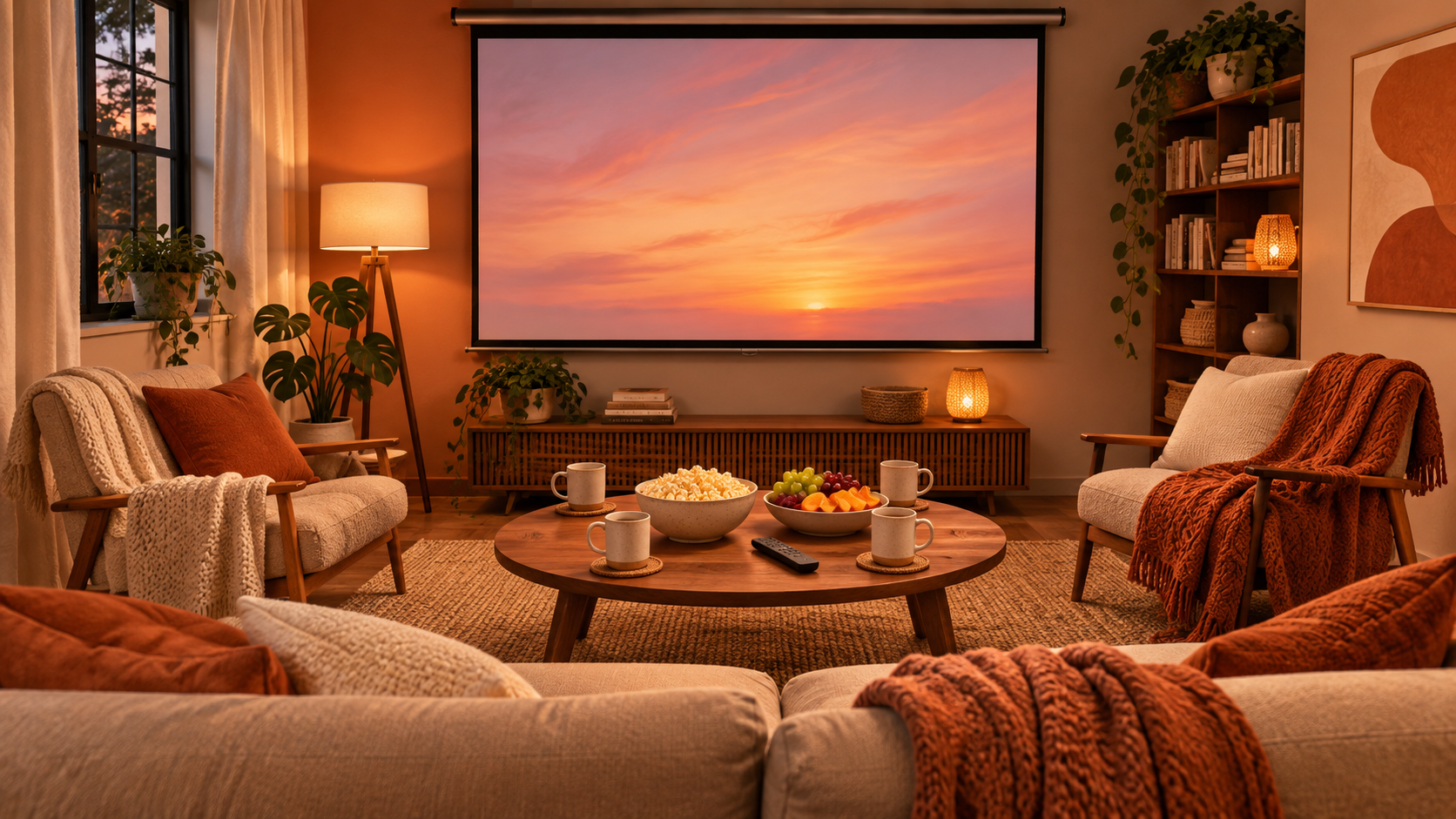
AI generated editorial illustration
Start with the evening you want to share
A shared movie night can lose its momentum before the opening scene. Someone wants a familiar comedy, someone else suggests a demanding drama, and the group spends its best hour scrolling through possibilities. The difficulty is not necessarily a shortage of good films. It is the absence of a shared idea of what the evening should feel like. A little planning can give different tastes room without turning a casual invitation into a committee meeting.
Begin with the occasion. Is this a relaxed catchup with a film in the middle, or an evening built around watching closely and discussing afterward? Neither approach is better, but they create different expectations. Tell guests which one you have in mind. A person hoping to chat should know if the rest of the group expects quiet throughout the screening.
Ask about boundaries before collecting favourites
Asking everyone for their favourite movie can produce a list with little overlap. Ask instead what would make the evening uncomfortable or impractical. Someone may prefer to avoid graphic violence, need an early finish, or find a particular theme difficult. Let people share these limits privately if they prefer. Nobody needs to explain a personal history to have a reasonable viewing boundary respected.
Then collect a positive preference from each person: something funny, a strong mystery, a visually interesting story, or a film with lively conversation afterward. These descriptions are more flexible than rigid genre labels. A comedy with a mystery at its centre might suit two tastes at once. Keep essential access needs separate from negotiable preferences, so captions or an appropriate language track do not become items someone has to win in a vote.
Build a shortlist small enough to discuss
Invite each guest to suggest one title, then reduce the options to a short list that fits the agreed boundaries. For a small group, three possibilities are usually enough to have a useful conversation. This is a planning suggestion, not a rule about the ideal number. The point is to make the choice manageable before people arrive and start defending whatever catches their eye on the screen.
Present each candidate in the same way: title, running time, basic premise and the reason it might suit this group. Avoid sending several trailers for one favourite and a bare title for everything else. Equal information makes the comparison fairer. Keep major plot discoveries out of the description, and check whether someone has already seen a candidate without automatically removing it. A willing rewatch can still be a shared choice.
Check practical access before the final vote
A promising suggestion is not ready until the host knows how the group can watch it. When a guest shares a page such as soap2day, record the film title and treat the viewing arrangements as a separate check. Use authorized viewing sources and confirm current regional availability before settling on the film. A suggestion found online does not establish that a particular screening option is available or appropriate for the group.
Check the actual device, language options and accessibility features you intend to use. If there is a rental charge, agree who will cover it before anyone pays. Avoid making a guest reveal a subscription password or solve an account problem in front of everyone. Keep one agreed alternative ready in case the selected film becomes unavailable or the equipment does not cooperate.
Choose a fair way to make the decision
Once every option is acceptable, use a simple decision method and explain it before voting. Each person might name a first and second choice, with the host choosing between tied films. Another group might rotate who makes the final selection across several gatherings. The method matters less than avoiding a situation where the loudest person changes the rules until their favourite wins.
Make room for an honest lack of enthusiasm without restarting the entire search. Someone can agree that a film suits the evening without declaring it their personal ideal. For regular gatherings, keep a few unused suggestions for another time. Rotating influence is more generous than promising that one movie will satisfy every preference equally. It also gives quieter guests a clear opportunity to shape a future evening.
Decide what to do if the film turns out to be a poor fit. The group could switch to the agreed alternative or spend the remaining time talking. Allow anyone to step away without making them responsible for everyone else’s enjoyment. A backup arrangement is useful because it removes the pressure to finish something solely because choosing it took effort.
Make the room easy to settle into
Comfort is practical rather than decorative. Check that everyone can see the screen without twisting around another person, and offer a choice of seats where possible. Test the sound from the seats people will actually use. Dialogue that seems clear beside the television may be harder to follow across the room. Confirm captions before the film starts instead of treating them as an interruption once someone asks.
Keep a little light available for moving around, place drinks on stable surfaces and leave a clear route to the door. Ask about food allergies or other dietary needs before preparing shared snacks. Simple food that people can serve themselves reduces the host’s need to keep leaving the room. Elaborate decorations are optional; a place to sit comfortably and follow the story is the useful foundation.
Set a rhythm that respects different schedules
Give guests both an arrival time and a film start time. That creates space for greetings without making punctual people wonder when the evening will begin. Work backward from the intended finish, allowing for a break and a little conversation. Choosing a film that barely fits the available time can make the entire gathering feel rushed, particularly when someone has transport or caring responsibilities afterward.
Agree on pauses, conversation and phones in a friendly way. A planned break can help a longer screening, while a shorter film may need none. Keep necessary phone access available without expecting others to watch a bright screen beside them. If somebody needs to leave early, make that straightforward. Attending part of the evening should not require an apology or an explanation to the whole room.
Leave room for different reactions afterward
When the credits arrive, resist immediately asking everyone to give a score. Start with an open question about a scene, character or moment that stayed with them. Someone who disliked the film may still have noticed something interesting. Someone who enjoyed it may not want to defend that reaction as if it were an argument. A conversation can hold both responses without deciding which viewer understood the movie correctly.
Close by asking what would make the next gathering easier: an earlier start, a different seat, a shorter film or another kind of story. Take the useful feedback without conducting a review of every hosting decision. A thoughtful movie night does not require unanimous taste. It gives people a fair choice, a comfortable setting and enough freedom to enjoy being together, even when their opinions of the film differ.
For more perspectives on media and storytelling, browse ModernNewsMedia Digital Trends.