
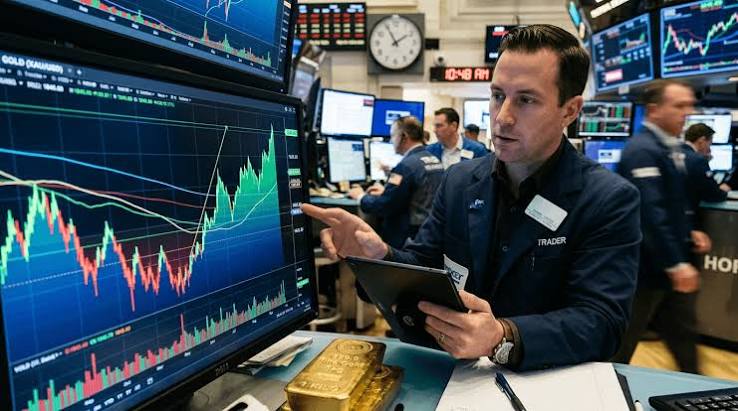
Gold has a way of pulling new people into markets. Whenever geopolitical tension rises, inflation worries return or central banks change course, the price of the metal tends to make headlines, and retail interest follows. The latest wave of attention has a different character from earlier ones, however. Instead of simply buying coins or exchange-traded funds, a growing number of individual traders are speculating on short-term gold price moves through leveraged products, and they are becoming more selective about where they do it.
Brokers report that metals, and gold in particular, have become one of the most actively traded product groups among their retail clients. That has turned the question of the best gold trading platform into a live debate on trading forums and comparison sites. The answers traders give are revealing, because they focus less on marketing and more on execution, costs and trust.
Market commentators often describe gold as a “crowded” retail trade during periods of stress. Many people are watching the same price levels and reacting to the same news, which can make price swings sharp and sometimes unpredictable over short time frames.
Physical gold versus price speculation
It helps to separate two very different activities that both get called “buying gold”. One is owning the metal, whether as bars, coins or through a fund that holds physical bullion. The other is trading the price, typically through contracts for difference (CFDs) or futures, where the trader never owns any metal and is exposed only to the price movement.
Owning physical gold involves storage, insurance and dealer markups, but no leverage and no margin calls. Trading gold CFDs, by contrast, allows positions to be opened with a fraction of their value as margin. That magnifies both gains and losses, and it means a relatively modest move in the gold price can wipe out the margin on an over-sized position. Financial educators stress that these are fundamentally different risk profiles, even though the underlying asset is the same.
What traders say matters most
Discussions among active metals traders tend to return to a handful of practical issues:
- Spreads during volatile sessions. Gold spreads can widen noticeably around major US data releases and at market open, which affects short-term strategies.
- Overnight financing. Holding a leveraged gold position for days or weeks incurs swap charges that can add up.
- Execution quality. Slippage on fast-moving news can make the difference between a planned loss and a larger one.
- Range of metals. Some traders want silver, platinum or industrial metals alongside gold to diversify or trade relative value.
- Regulation and fund safety. Before any of the above, traders want to know who holds their money and under what rules.
That last point has grown in importance as scams involving fake gold investment schemes have multiplied. Some operate through social media, promising steady returns from “gold arbitrage” or similar ideas. Others pose as legitimate brokers with cloned websites. Consumer protection agencies in several countries have issued warnings, and the common advice is to verify any firm on the official register of a recognised regulator before depositing.
Beyond gold: the wider metals menu
One noticeable trend is that traders who start with gold often branch out. Silver tends to move in the same general direction as gold but with larger percentage swings, which attracts traders looking for volatility and also catches out those who underestimate it. Platinum and palladium are more closely tied to industrial and automotive demand. Copper and aluminium track global economic activity and are often watched as indicators of manufacturing and construction trends, particularly in China.
Brokers have responded by expanding their metals lists. Several offer the main precious metals quoted against the US dollar, along with base metals as CFDs. One example is the broker behind ultimamarkets.com, which lists gold (XAUUSD), silver (XAGUSD), platinum (XPTUSD), palladium (XPDUSD), copper and aluminium among its CFD products, available through MetaTrader 4, MetaTrader 5, WebTrader and a mobile app. For EU clients, an affiliated entity, Ultima Markets Cyprus Ltd, is regulated by CySEC. As with any broker, readers should confirm the regulatory status and the legal entity that would hold their account in their own country.
Reading the drivers of the gold price
Part of what makes gold attractive to traders is that its price reacts to a recognisable set of factors. Analysts commonly point to real interest rates, the strength of the US dollar, central bank buying, inflation expectations and geopolitical risk as the main influences. When real yields fall, the opportunity cost of holding a non-yielding asset like gold drops, which has historically tended to support prices. A stronger dollar often weighs on gold, since it is priced in dollars.
These relationships are not fixed, though. Periods arise when gold and the dollar rise together, or when gold falls despite apparent safe-haven demand. Seasoned traders warn against treating any single driver as a reliable signal and recommend watching how the market actually responds rather than assuming a textbook reaction.
Timing and trading sessions
Gold trades almost around the clock during the working week, but liquidity is not constant. Activity tends to pick up when the London market opens and again when it overlaps with New York trading hours, which is also when many major US economic figures are released. Late in the US afternoon and during the Asian morning, volumes are typically thinner, and spreads on some platforms can be wider as a result.
For retail traders in time zones far from London and New York, that creates a practical dilemma. The most active hours may fall late at night or early in the morning. Some traders adapt by placing pending orders in advance rather than trying to react live. Others choose to trade only during the quieter sessions and accept smaller moves. Either way, experienced traders recommend learning how gold behaves at different times of day before committing real money, since the same strategy can produce very different results depending on when it is used.
How careful traders are approaching it
Among more disciplined retail traders, a few habits stand out:
- Sizing positions so that a normal daily move in gold does not threaten the account.
- Using stop-loss orders while understanding that they may be filled at a worse price in a gap.
- Checking the economic calendar before major US releases and central bank meetings.
- Comparing total costs, including swaps, on a demo account before going live.
- Keeping a trading journal to see whether a strategy holds up over time.
Risk educators also highlight the danger of revenge trading after a loss in a fast market. Gold’s sharp intraday moves can tempt traders to double down, which is one of the quickest ways to turn a small setback into a large one.
The outlook for retail metals trading
Few expect interest in gold to fade soon. As long as inflation, interest rates and global tensions remain in the news, the metal is likely to stay in focus for retail traders. What appears to be changing is the sophistication of the audience. More traders are asking pointed questions about spreads, execution and regulation before they commit, and they are more willing to switch providers if the answers are unsatisfying.
For anyone considering trading gold, the most useful perspective is a sober one. A platform choice can affect costs and convenience, but it cannot change the fundamental risk of leveraged trading. Most retail CFD accounts lose money, and gold’s reputation as a safe haven does not make a leveraged bet on its price safe.
Risk warning: Gold and other metals traded as CFDs are leveraged, and price swings can lead to rapid losses; the majority of retail CFD traders lose money. This article is for information and is not financial advice. Verify any provider’s regulation yourself and consider whether trading suits your circumstances.