Weather forecasting has been one of the great quiet triumphs of applied physics: equations of fluid motion, solved on supercomputers, predicting the atmosphere days ahead. Now that edifice is being challenged by models that know no physics at all. Machine-learning systems trained on decades of atmospheric data are matching and, on several headline measures, beating the traditional forecasts — faster, cheaper, and with a skill that has surprised even their creators.
The results have accumulated quickly. AI models from research labs and technology companies have outperformed the European Centre’s flagship physics-based model on standard skill scores for variables like temperature and wind at multi-day lead times, in evaluations that drew wide attention in the field. Coverage in Nature of these comparisons notes the striking efficiency: a forecast that takes a supercomputer hours can be produced by a trained AI model in minutes on far humbler hardware. For readers of our science and technology coverage, the speed matters as much as the accuracy — it changes what forecasting can be used for.
Why the AI Models Work
The traditional approach simulates the atmosphere forward from current conditions using the equations of motion, a method that is physically principled but computationally punishing and sensitive to approximations in how clouds, turbulence and radiation are represented. The AI approach is empirical: show a neural network decades of past weather — how patterns evolved, what followed what — and let it learn the statistical structure of the atmosphere directly. Given enough data, the learned patterns capture relationships that the equations approximate poorly.
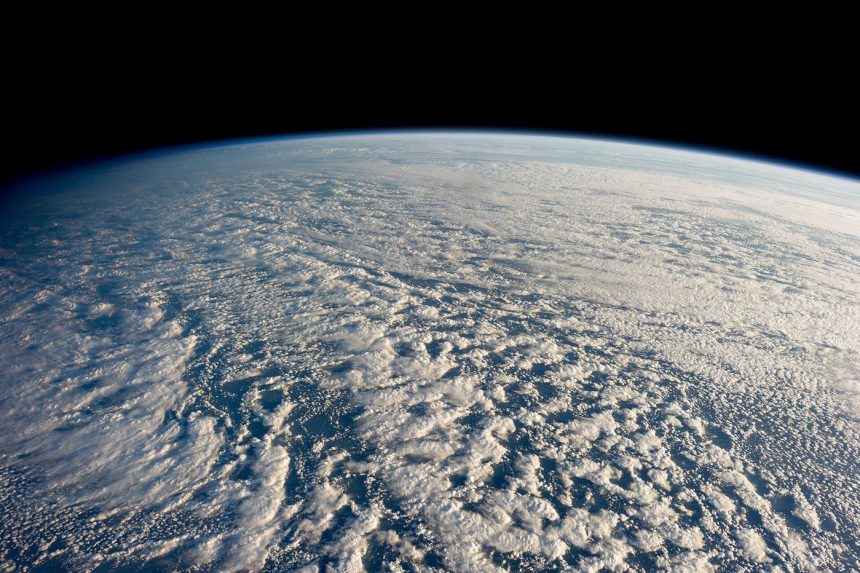
Data is the decisive ingredient, and here meteorology had a head start. Decades of satellite observations, radar, weather stations and reanalysis datasets gave AI researchers the training material of their dreams — far richer than in most scientific fields. Satellite imagery of the kind routinely published by NASA is part of that corpus, alongside the less glamorous but equally vital archive of surface measurements. The models are, in a real sense, standing on the shoulders of the physics-based system’s data-gathering infrastructure.
What They Still Cannot Do
Scepticism from forecasters is substantive, not tribal. AI models are interpolators: they excel at patterns resembling their training data and can stumble on unprecedented extremes — precisely the events where forecasts matter most. They do not conserve mass or energy by construction, and their internal reasoning is opaque, which troubles meteorologists who need to explain a forecast, not merely issue one. Predicting a hurricane’s track is one thing; explaining why it will turn is another, and emergency managers need the why.
There are also practical gaps. Traditional models produce the full three-dimensional state of the atmosphere, feeding downstream applications from aviation to air quality; AI models are catching up but remain narrower. And the training data itself encodes the biases of the observing system, which is dense over wealthy regions and sparse elsewhere — a limitation that could entrench geographic inequality in forecast quality unless deliberately addressed.
The Hybrid Future Forecasters Expect
Few meteorologists expect AI to replace physics outright. The emerging consensus favours hybrids: AI components handling the pattern recognition they do best inside systems that retain physical constraints, ensemble methods blending both approaches, and AI used to post-process traditional forecasts or to generate the large ensembles that quantify uncertainty. National weather services are already operationalising AI guidance alongside their supercomputer runs, treating the new models as powerful colleagues rather than replacements.
For the public, the change will arrive as better forecasts rather than different ones: sharper warnings of extreme heat and flooding, more reliable week-ahead outlooks, and eventually warnings tuned to individual locations. The physics-based forecast took half a century to mature. Its AI challenger has needed only a few years to become competitive — a pace that suggests the next decade of meteorology will be defined not by a contest between the two, but by how intelligently they are combined.